%404x.png)
Returning to work after maternity leave is a deeply emotional experience for many parents. While there’s often excitement about re-engaging with careers and professional lives, there’s also the challenge of managing the delicate balance between professional responsibilities and parental duties. One of the toughest hurdles is breastfeeding or pumping at work, something that many employees may not fully anticipate until they’re back on the job. But there’s good news: with proper support, lactation doesn’t have to be a battle.
Corporate lactation stations play a pivotal role in supporting employees during this challenging transition. While the presence of a designated space is required under federal law, strengthened and expanded under the 2022 PUMP Act, there’s more to it than just offering a room with a door that locks.It’s about creating a space that truly meets the needs of parents, allowing them to comfortably express milk while still performing their jobs effectively. Let’s dive into how ergonomic lactation stations can make a world of difference for working parents and why companies should prioritize these spaces in the workplace.
The Legal Requirements: Lactation Spaces Are Not Optional
First things first: it’s not just a good idea for employers to provide lactation spaces, it’s the law. Today, the most current standard comes from the PUMP Act (Providing Urgent Maternal Protections for Nursing Mothers Act), passed in 2022, which expanded earlier requirements under the Affordable Care Act.
The PUMP Act requires nearly all employers, regardless of size, to provide:
- Reasonable break time for employees to express breast milk for one year after a child’s birth
- A private, non-bathroom space that is shielded from view and free from intrusion
Here’s the catch, and it matters, the PUMP Act extended these protections to millions of employees who were previously excluded, including many salaried workers, teachers, nurses, and agricultural employees. (replace with your preferred citation format if needed)
Employers also face clearer enforcement now. If a compliant space is not provided, employees can take legal action under federal wage and hour law.
One detail that often gets missed: the law focuses on functionality, not just presence. A locked room technically meets the requirement, but if it’s cramped, poorly lit, or lacks basic ergonomic support, employees may avoid using it. Compliance on paper does not always translate to real-world usability.
Ergonomics: The Key to a Functional Lactation Space
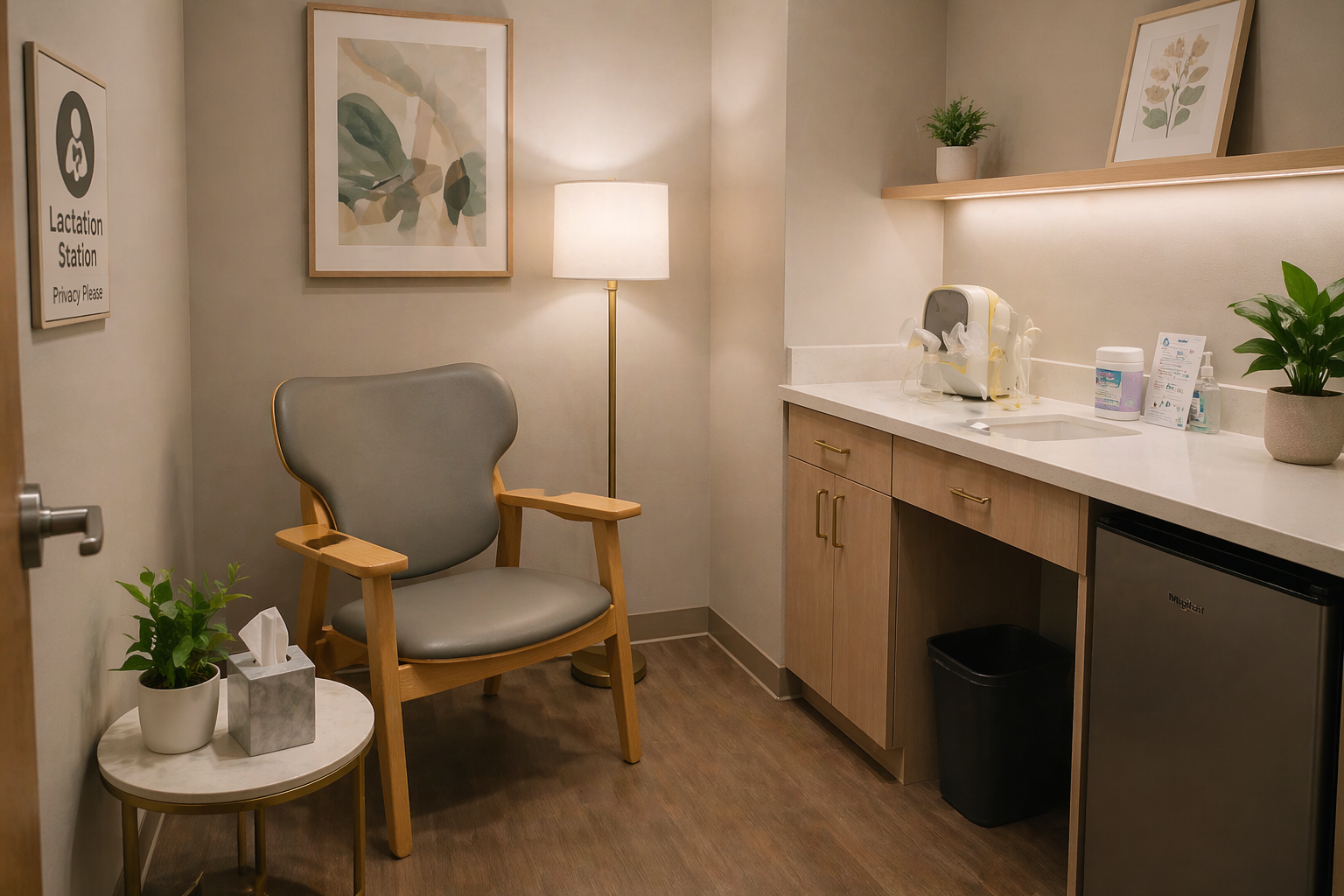
A room that meets the legal minimum is a start, but if it’s uncomfortable, inconvenient, or poorly designed, employees will avoid using it. When lactation spaces are designed with ergonomics in mind, the experience becomes more practical and manageable.
Comfortable Seating:
If a lactation station has a chair that doesn’t provide adequate support, parents are likely to experience back pain or discomfort, which can make the entire pumping process more stressful. A supportive chair, preferably one with adjustable height and lumbar support, is essential. Employees will likely be in the room for anywhere between 15-30 minutes at a time, so comfort is a must.
Proper Table Height and Surface:
The table should be at a comfortable height for both standing and seated use, ensuring employees don’t strain their arms or wrists while using the equipment. The surface needs to be clean and smooth, allowing for easy placement of breast pumps and accessories.
Lighting:
Dim lighting in a lactation room can make it hard to see what you’re doing. Good task lighting is essential, especially when handling sensitive equipment. Choose warm, soft lighting that can create a welcoming atmosphere while still providing the necessary visibility.
Privacy, But Also a Sense of Calm:
For employees who are breastfeeding or pumping, privacy is paramount. Nobody wants to feel exposed or rushed. But there’s also the mental aspect: new parents may already be feeling overwhelmed. Creating a serene, quiet environment with minimal distractions can help employees relax. This can include soundproofing the room, providing soft, neutral colors, and avoiding harsh or institutional decor. Think about the atmosphere you’d want for an intimate, self-care moment, then bring it to the workplace.
The Emotional Side of Lactation Stations
While it’s easy to focus on the physical aspects of lactation, the emotional side can’t be overlooked. The transition back to work can be difficult for many new parents, especially if they feel unsupported by their employer. The act of pumping breast milk in a corporate setting can feel awkward, isolating, or even shameful, especially if the space isn’t conducive to comfort and privacy.
That’s why it’s so important to create a lactation room that acknowledges the emotional reality. Providing a clean, comfortable, and quiet space sends the message that the company truly cares about supporting employees as they transition back into the workplace. Parents who feel supported are more likely to return to work with a positive mindset, which can ultimately contribute to higher retention rates and employee satisfaction.
Why Employers Should Invest in Lactation Rooms
Creating ergonomic lactation spaces isn’t just about compliance; it’s about nurturing a more inclusive, supportive, and productive workplace.
- Legal Compliance: As mentioned earlier, the PUMP Act mandates that employers provide lactation breaks and private spaces for breastfeeding employees. Non-compliance can lead to potential legal issues and penalties.
- Employee Retention and Satisfaction: Many parents feel immense pressure to choose between their job and their family. A well-designed lactation room can alleviate some of that stress, making it easier for parents to feel they can successfully balance both worlds.
- Workplace Productivity: A comfortable lactation room allows parents to efficiently pump and get back to work. Employees will feel less distracted, knowing they have a private, dedicated space to express milk. And when employees feel supported in the workplace, they’re more likely to stay engaged and productive.
- Company Reputation: Companies that prioritize parental support, by offering not only lactation rooms but also flexible work schedules and family-friendly policies, send a message to potential hires that they care about work-life balance. This can attract top talent, particularly employees who are in or planning to start families.
Designing a Space That Works for Everyone
When designing lactation stations, it’s important to recognize that not all parents will have the same needs. Here are a few tips for making sure the space is as inclusive and functional as possible:
Consider Accessibility: Lactation spaces should be accessible to all employees, including those with disabilities. Ensure that the space is easy to navigate and that there are no obstacles for employees who may need extra assistance.
Break Time Flexibility: The frequency and length of lactation breaks can vary depending on the employee’s needs and schedule. Some employees may need to pump multiple times a day, while others may only need a single break. Allow for flexible scheduling to accommodate these needs without making employees feel pressured.
Add a Personal Touch: Offering amenities such as a small refrigerator for storing milk, a sink for cleaning pump parts, and a comfortable chair can go a long way. Personalize the space with touches like artwork or soft colors to make the room feel welcoming.
Practical Examples of Lactation Spaces in Action
Some companies are already setting the standard when it comes to lactation room design. For instance, tech giant Google offers "milk stations" that are fully equipped with recliners, refrigerators, sinks, and even relaxing features like calming music. The company’s commitment to making their lactation rooms as comfortable as possible reflects their understanding of the emotional and physical challenges that parents face when returning to work.
Similarly, companies like Facebook and Bank of America have taken steps to ensure their lactation rooms are ergonomic, accessible, and functional. These companies recognize that by offering a supportive environment for parents, they are fostering loyalty and productivity in their workforce.
The Takeaway: Creating Spaces That Support Real Needs
So what does all of this mean for employers? Simply put, creating ergonomic, accessible, and comfortable lactation stations isn’t just the law, it’s a vital investment in your employees’ well-being. A properly designed space not only helps working parents stay compliant with legal requirements but also fosters a sense of respect and inclusion in the workplace.
While building a lactation station may require a financial investment, the return is substantial: higher employee satisfaction, improved retention, and a workplace culture that genuinely values families. When employees know their company supports them through their most challenging transitions, they are more likely to stay loyal and engaged, turning a simple act of compliance into a powerful retention tool.
At Nessel, we understand the intricacies of workplace lactation laws and regulations, helping employers design spaces that not only comply but also truly support their employees. So, here’s the catch: designing a functional and ergonomic lactation room is not a luxury, it’s a necessity. And for companies, it's an opportunity to show that they’re not just following the law, they’re supporting their people.
%404x.png)
