%404x.png)
Returning to work after welcoming a new child rarely unfolds the way people imagine. The commute feels different. The office smells faintly of coffee and printer toner again. Slack notifications stack up while the body still runs on newborn rhythms. Somewhere between meetings and deadlines, a quiet logistical question emerges.
Where will I pump?
A lactation chair may seem like a small detail in that moment, but for nursing employees returning to the workplace, the chair often defines the entire experience of pumping at work. Comfort, posture, privacy, hygiene, even confidence, all of it circles back to where someone sits during those 20 to 30-minute pumping sessions that happen several times each day.
For employers building truly human-centered workspaces, this detail matters more than it might first appear.
The right chair doesn’t just fill a room.
It quietly reshapes a return-to-work story.
The Overlooked Moment in Workplace Design
Most HR teams know the legal baseline by now. U.S. federal law requires employers to provide a private, non-bathroom space and reasonable break time for employees who need to pump breast milk during the workday.
So organizations create lactation rooms.
They add locks. A table. Maybe a refrigerator. Sometimes a sink.
But then comes the chair.
And here’s where the experience often unravels.
A spare office chair.
A wobbly lounge seat.
A leftover conference chair that leans back too far.
The space may technically meet requirements. But pumping is physical work, and the body notices quickly when the furniture isn’t designed for it.
Back strain creeps in. Pump flanges slip out of place. Bottles sit awkwardly on the floor or balance precariously on a knee.
Suddenly, the “break” feels stressful.
The irony is that this entire experience can hinge on one thing.
Where someone sits.
Pumping Isn’t Passive
There’s a misconception that pumping is simply a quiet break from work. Anyone who has done it knows that’s not quite true.
It’s a moment of multitasking, coordination, and physical awareness.
A typical pumping session lasts 20 to 30 minutes and occurs several times per day.
During that time, employees often need to:
- Adjust pump positioning
- Stabilize bottles or flanges.
- Keep milk containers secure.
- Maintain an upright posture to support milk flow.
Traditional office seating wasn’t built for that.
A lactation chair is.
Why the Chair Changes the Entire Experience
The difference between a standard chair and a purpose-built lactation chair can feel subtle at first. But once someone sits down, the design becomes obvious.
Think about posture.
Many office chairs encourage leaning back. That’s comfortable for meetings or computer work, but pumping typically works better when the body remains upright and stable.
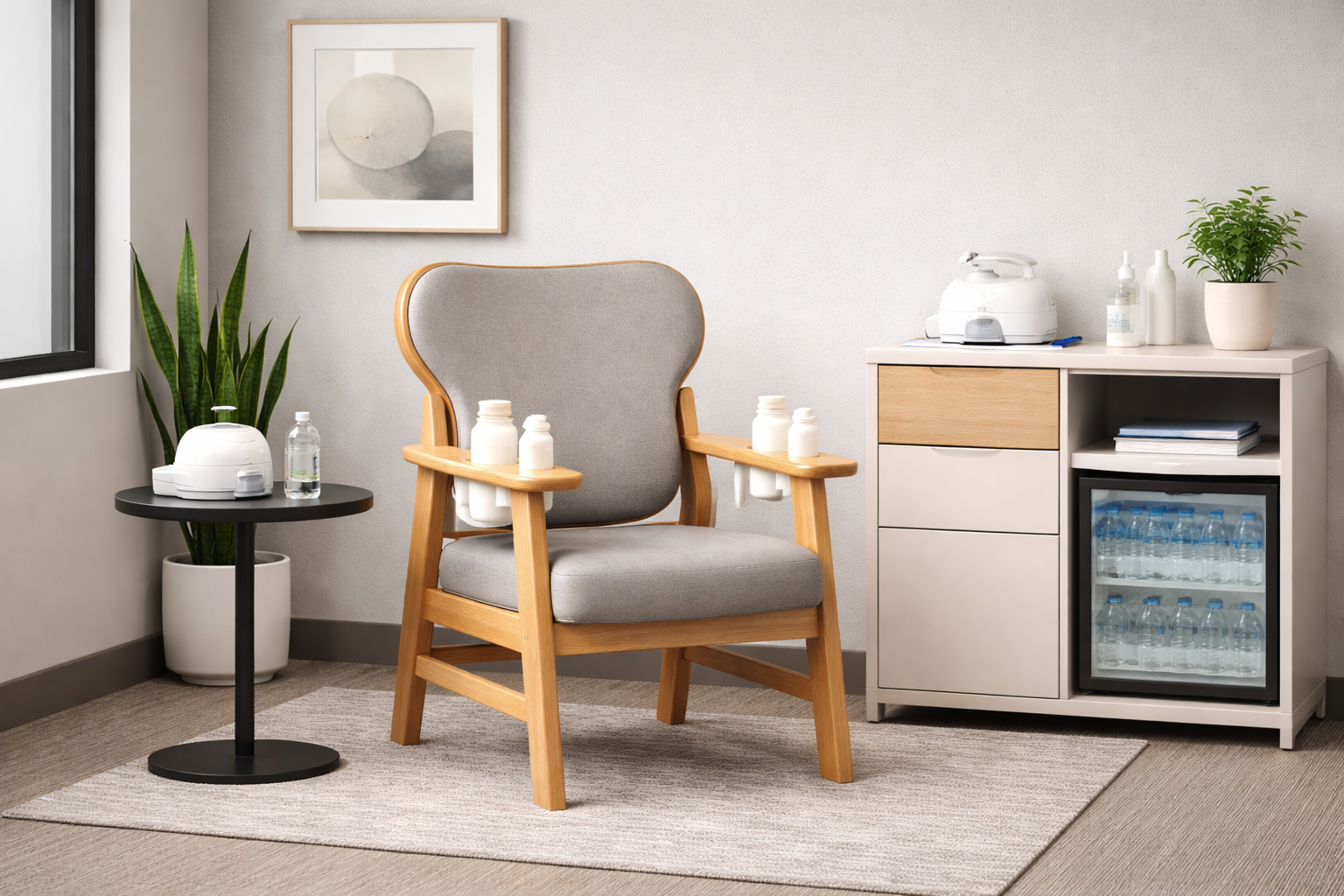
The Nessel Lactation Chair, for example, was designed specifically to create proper back support and stability during pumping sessions.
That balance, relaxed yet upright, helps prevent the slouching or awkward forward-leaning that often happens in generic seating.
It sounds small.
But for someone pumping three times a day, five days a week, that posture adds up quickly.
Thoughtful Design Shows Up in Small Details
The design of a lactation chair becomes even more important once you notice the everyday realities of pumping.
Milk spills.
Pumps need space.
Bottles need somewhere secure to sit.
Nessel’s lactation chair addresses those practical moments in ways traditional furniture rarely does.
Features include:
- Medical-grade silicone upholstery that is easy to wipe clean between users
- Built-in bottle holders tucked into the armrests to prevent accidental spills
- Wide armrests that can hold pump equipment, laptops, or notebooks
- Ergonomic support that stabilizes the body during pumping sessions
None of these features feels flashy. They simply make the experience easier.
And in shared workplace lactation rooms, cleanliness matters too. The chair’s wipeable, medical-grade material allows the surface to be sanitized quickly between users, an important factor for hygiene and comfort in shared spaces.
It’s a practical design rooted in lived experience.
Designed by People Who Understand the Moment
There’s another layer here that’s easy to miss when reading product specs.
The Nessel lactation chair was designed by mothers who understand what pumping at work actually feels like.
That perspective shapes the details.
Armrests sit at a height that stabilizes pump flanges.
Bottle holders prevent accidental tipping.
Materials are easy to clean because spills happen.
These aren’t theoretical improvements.
They’re small design decisions that come from real experience.
And those decisions make the difference between a room that technically works and a room that actually feels supportive.
The Chair as a Signal of Workplace Culture
Walk into a thoughtfully designed lactation room and something shifts immediately.
Lighting feels calmer.
The space feels intentional.
The chair looks like it belongs there.
That’s not accidental.
Furniture sends signals about what a workplace values.
A dedicated lactation chair communicates something very specific: this space was created on purpose. Not repurposed. Not improvised.
When employees see that level of thoughtfulness, it shapes their perception of the organization.
A comfortable, hygienic chair tells employees that leadership considered the details of their experience, not just the legal requirements.
And that message resonates far beyond the lactation room.
Retention, Well-Being, and Real Outcomes
Employers sometimes view lactation spaces as a compliance task.
But the impact goes deeper.
Workplace support for breastfeeding parents is closely connected to employee retention and long-term satisfaction. When new parents feel supported in balancing work and family responsibilities, they are more likely to return after leave and remain with the organization long term.
There’s also a wellness dimension.
Pumping in an uncomfortable environment can increase stress and physical tension. Conversely, a calm, ergonomic environment helps employees focus, relax, and return to work more quickly.
In other words, thoughtful lactation space design benefits both employees and employers.
And again, the chair often sits at the center of that experience.
The Modern Lactation Space Is Evolving
Workplaces are slowly shifting away from the idea that lactation rooms should be hidden or improvised.
Instead, organizations are beginning to view them as part of a broader commitment to workplace wellness and inclusion.
Nessel builds furniture specifically for lactation and wellness rooms, including lactation stations, pods, portable sinks, and purpose-built seating.
These solutions are designed to help organizations create clean, sanitary, and supportive environments for nursing employees without requiring complicated renovations.
For companies managing multiple offices, healthcare facilities, universities, or public spaces, this approach offers flexibility.
A lactation chair becomes one piece of a broader ecosystem designed to support employees through a major life transition.
A Seat That Rewrites the Story
It’s easy to underestimate how emotional the return-to-work period can be for new parents.
The schedule is different.
The body is still adjusting.
And pumping at work can feel vulnerable at first.
A well-designed lactation chair won’t erase those challenges.
But it can soften the experience.
It gives someone a place to sit where their posture feels supported, where their pump has space, and where their bottles are secure.
Where the environment feels calm instead of improvised.
Sometimes the smallest details carry the most meaning.
The Takeaway
A lactation chair is not just furniture.
It’s part ergonomics.
Part hygiene.
Part emotional design.
When organizations invest in purpose-built lactation furniture, they signal something powerful to their employees: your needs were considered here.
Nessel’s lactation chair reflects that philosophy, combining ergonomic support, easy-to-clean materials, and thoughtful features designed specifically for pumping employees.
It’s a practical tool, yes.
But more than that, it helps rewrite the return-to-work story for nursing parents.
A story that feels less rushed, less awkward, and more supported.
Sometimes the future of human-centered workspaces begins with something as simple as a chair.
And the moment someone finally sits down and exhales.
%404x.png)
