
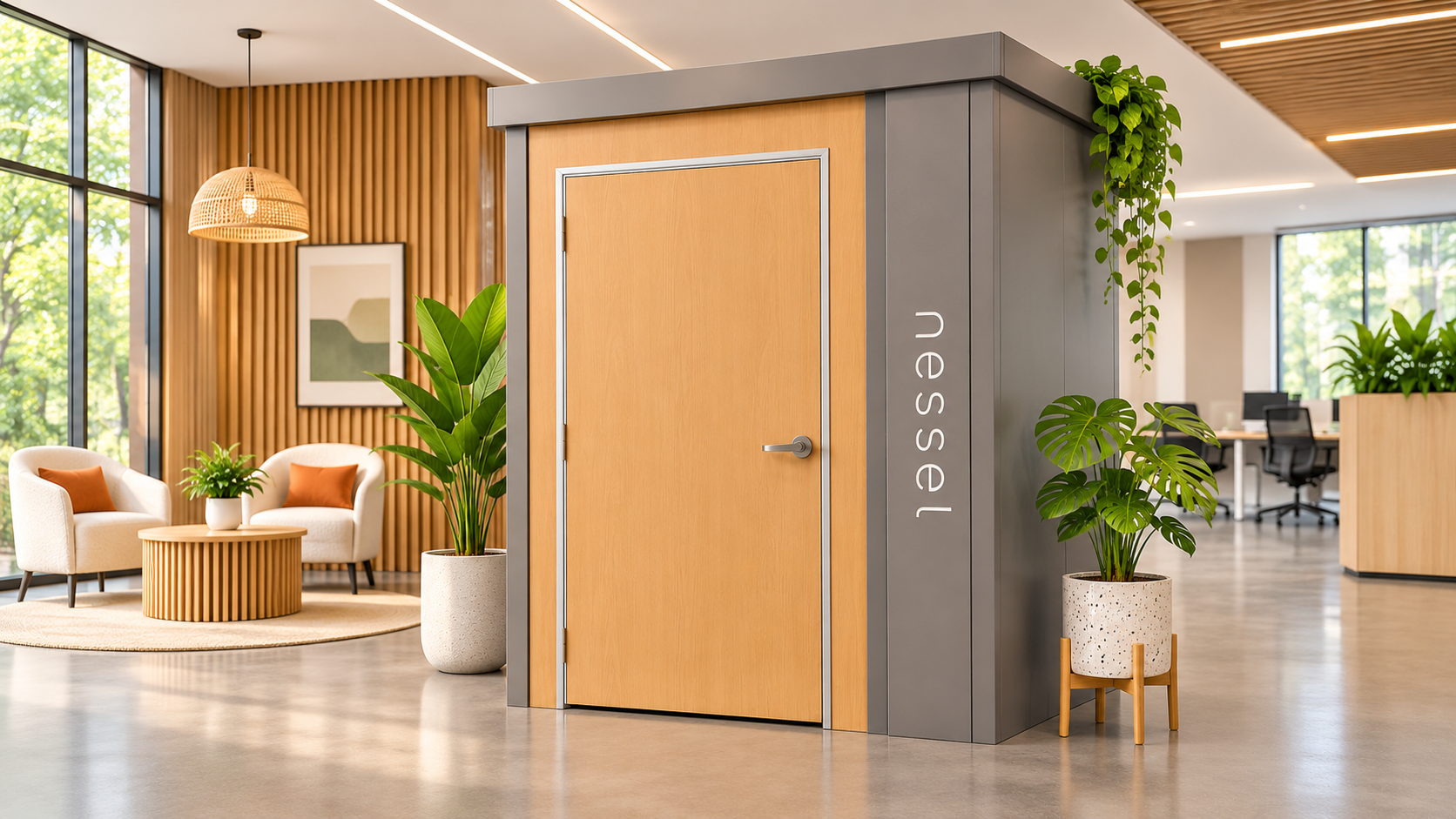
An employee emails HR on a Tuesday. She's coming back from parental leave in three weeks, and she'd like to know where she can pump. For many employers, that one message kicks off a bigger question: should we rent or buy a lactation pod, or keep improvising with a borrowed office and a sticky note on the door?
It's a fair question. And it doesn't have one right answer.
Renting and buying both solve the same legal problem. They just solve it on different timelines, with different budgets and different levels of commitment. The trick is matching the option to what your workplace actually looks like today, and what it might look like a year from now.
Let's start with the part that isn't optional.
What the law asks of you, whichever way you go
The federal baseline comes from the Fair Labor Standards Act, as expanded by the PUMP for Nursing Mothers Act, signed into law on December 29, 2022. According to the U.S. Department of Labor's Fact Sheet #73 (revised December 2025), most nursing employees have the right to:
- Reasonable break time to express breast milk, each time they need to, for up to one year after the child's birth
- A place other than a bathroom that is shielded from view and free from intrusion by coworkers and the public
- A space that's functional for pumping, and available whenever it's needed if it isn't dedicated to one person
Here's a detail many employers miss. The Department of Labor says a space that is temporarily created or converted for pumping is sufficient, as long as it meets the privacy standard. So a rented pod and a purchased pod stand on equal legal footing. Ownership isn't what the law cares about. Privacy, function, and availability are.
Department of Labor guidance goes a step further. Law firm summaries of that guidance note the space should include a place to sit and a flat surface other than the floor for the pump, and the DOL recommends access to electricity and, ideally, a nearby sink.
The stakes are real, too. Since April 28, 2023, employers who violate these rights can face remedies that include lost wages, liquidated damages, compensatory damages and, where appropriate, punitive damages. Before suing over an inadequate space, an employee generally must notify the employer and allow 10 days to fix the problem. Ten days. That's not much runway if your plan is "we'll figure it out."
One more thing. The FLSA is a floor, not a ceiling. Many states go further, so check your state's rules alongside the federal ones.
When renting a lactation pod makes sense
Renting is the quick, low-commitment route. Rental lactation pods come on daily and monthly terms, with no plumbing, tools, or build-out required. That flexibility matters more than people expect.
Renting tends to fit when:
- The need is temporary or uncertain. One employee returns from leave, and nobody knows yet whether another will follow next year.
- You're piloting. You want to see how often a space actually gets used before you commit a budget.
- Your space is in flux. A lease ends soon, an office is mid-renovation, or a team is about to relocate.
- It's an event. Conferences, expos, and arenas host nursing attendees and staff for a few days at a time.
- Speed beats everything. The 10-day clock is ticking, and construction isn't an option.
Our rental lactation pods arrive as a private, lockable space with seating, lighting, and power outlets for a pump. Each pod is cleaned and sanitized between rentals. An ADA-compliant, accessible option is available. Delivery, installation, and takedown can all be handled for you.
There's a quieter benefit, too. Renting lets you learn. After a few months, you'll know how many people use the space, at what hours, and whether one pod is enough.
When buying a lactation pod makes sense
Buying is a great option for a longer-term solution.
Buying tends to fit when:
- You expect steady demand. A larger workforce almost always means someone, somewhere, is pumping.
- You're planning multiple sites. Consistent spaces across locations make policy simpler to write and easier to follow.
- You want the space to stay put. A permanent fixture signals that this isn't a favor; it's part of how you operate.
Purchased lactation pods come in two sizes, with soundproofing, a private locking door, skylights, and ventilation. Larger models can also include an optional Lactation Station that has a portable sink and private fridge. Rush options and professional assembly are available if you need them.
The tradeoff is upfront cost and planning time. You'll want a clear spot on the floor plan and a budget line before you order.
And if you already have a small private room? You may not need a pod at all. A Lactation Station can turn an existing room of roughly 5 by 7 feet into a working lactation space.
Five questions to ask before you decide
So what does this mean for your workplace? Most HR teams can reach a confident answer with a short, honest conversation around these:
- How many employees are likely to need the space in the next two years? Look at headcount, age ranges, and recent parental leave, not just today's single request.
- How long will you be in this building? A lease ending in eight months may change the math.
- Do you have a room you could convert? If yes, a lactation station might do the job. If not, a lactation pod creates the room for you.
- How fast do you need it? Rentals are built for quick setup. Purchases take planning, though rush options exist.
- Who will use it besides nursing employees? Some workplaces find a quiet, private space gets requests from many directions. Your policy should say who gets priority.
The Nessel FAQ puts the first step simply: talk to your employee about their plans to pump once they're back. That conversation often tells you more than any spreadsheet.
The part spreadsheets miss
Picture the first week back from leave.
The alarm goes off before sunrise. A bag packed with pump parts, bottles, and cooler packs rides on one shoulder, the laptop on the other. Somewhere between the commute and the first meeting, there's a quiet worry: Where will I pump? Will someone walk in?
That worry doesn't care whether the space is rented or owned.
What it cares about is a door that locks. A seat that doesn't wobble. An outlet within reach. Light that isn't a flickering storage closet bulb. Many parents describe the difference between a makeshift spot and a real one as the difference between dreading every session and getting through them calmly.
You might notice something else, too. When the space feels deliberate, people talk about it. New hires hear about it. It quietly shapes how the workplace treats families.
One event director, quoted on our rental page, put it this way: "It's a small detail that made a big impact. It showed we care."
That's not a compliance outcome. It's a cultural one. But it starts with getting compliance right.
A hybrid path is fine, too
Here's the thing nobody tells you. You don't have to choose forever.
Plenty of employers rent first, watch how the space gets used, and buy once the pattern is clear. Others own pods at headquarters and rent for satellite offices or seasonal sites. It's not a cure-all, and it won't fit every budget cycle, but it removes the pressure of guessing right on day one.
The takeaway
Rent if your need is short-term, uncertain, or urgent. Buy if you expect steady demand and want a permanent, consistent space; opt for purchasing a lactation pod. Either way, make sure it's private, functional, available when needed, and never a bathroom.
If you're weighing the two, our team at Nessel can help you sort through space, timing, and budget. Our in-house architects and specialists can even help pick a discreet, accessible spot. Reach out here, and we'll walk through it with you.
FAQs
Does a rented lactation pod satisfy the PUMP Act?
It can. A space temporarily created or converted for pumping is sufficient if it's shielded from view, free from intrusion, and not a bathroom. Ownership isn't part of the test.
Are small employers exempt?
Employers with fewer than 50 employees may be exempt only if compliance would impose an undue hardship, judged against the business's size, resources, and structure. It's a narrow exemption, not an automatic pass. Employers must take action to receive an exemption; it is not automatically granted.
How long must I provide lactation space?
Under federal law, for up to one year after the child's birth. Some state laws extend protections further.
Does a lactation pod need a sink?
Federal law doesn't require one, but Department of Labor guidance recommends access to a sink. Some states do require running water nearby, so check local rules.
Can I rent a pod for a conference or event?
Yes. Rental pods are available on daily terms, which suits events, expos, and other short stays.
Disclaimer: This article is for general information only and isn't legal advice. Lactation accommodation laws vary by state and change over time. Consult an employment attorney or your state labor agency about your specific obligations.

