
If you run a business in Connecticut, the ground is about to move. The Connecticut 2026 workplace law changes arrive through Public Act 26-12, an omnibus bill Governor Ned Lamont signed on May 11, 2026, that stretches past 120 pages and folds dozens of separate proposals into one sweeping law. Most of it takes effect October 1, 2026, with a few pieces landing in 2027. So the window to get ready is now, not in the fall.
Some of these provisions are quite housekeeping. Others reshape how you post jobs, pay people, document accommodations, and set up the physical rooms inside your building. Here is what deserves your attention first, and what to do about each.
Wage and benefits, spelled out in every job posting
This is the change most employers will feel immediately. Starting October 1, 2026, every employer, regardless of size, has to include the wage or wage range and a general description of the benefits tied to a role in both public and internal job postings. Benefits are defined broadly, covering health insurance, retirement, fringe benefits, paid leave, and other non-wage compensation.
There is a subtle shift in the language that carries real weight. The law now refers to a range the employer "sets in good faith," rather than one it merely anticipates relying on. In plain terms, you should be able to defend the number you post. The rule also reaches beyond state lines, applying to certain out-of-state roles that report to a Connecticut supervisor, office, or worksite.
What to do: rework your posting templates now, get HR, recruiting, and compensation on the same page about how ranges are built, and update your offer letter and internal transfer steps.
A real ban on "stay-or-pay" agreements
Connecticut has prohibited employment promissory notes for years, but smaller employers used to be exempt. That exemption is gone. As of October 1, 2026, no employer of any size can require an employee or applicant, as a condition of employment, to sign an agreement that demands repayment if they leave before a set period, including agreements framed as paying back the cost of training. Those required notes are void as against public policy.
A few carve-outs survive, including repayment of genuine advances, property purchase or lease arrangements, certain educational sabbatical agreements, and collectively bargained terms. Everything else, the training clawbacks and retention repayment clauses, deserves a look from counsel before the deadline.
Bigger workers' comp exposure when safety gets ignored
Here is the one that should make safety citations feel urgent. Under the revised workers' compensation rules, when an employee is hurt because of an employer's cited and uncorrected violation of a health or safety regulation, benefits can climb to 100% of the worker's average weekly earnings, rather than the usual reduced replacement amount. The law also strengthens protections for healthcare and education workers injured in workplace assaults, including wage continuation and limits on draining their leave banks in covered situations.
The message is blunt. An open OSHA citation is no longer just a compliance headache; it is a direct financial risk. Document your abatement, tighten your corrective-action process, and talk reserve assumptions through with your carrier.
A new notice about accommodation rights
The Act creates a fresh obligation around disability accommodations. Employers must give written notice of an employee's right to reasonable accommodation under the ADA. Existing employees need that notice within 120 days of October 1, 2026, which works out to January 29, 2027. New employees get it when they start. And any employee who tells you about a disability must receive the notice within ten days of that conversation.
You can satisfy the requirement by posting a notice that the Labor Commissioner is expected to release, displayed somewhere employees can actually see it. Worth training supervisors here too, because the obligation can be triggered by a casual verbal mention, not just a formal written request.
Pay code guides for larger employers.
If you have 100 or more employees, October 1, 2026, brings a new transparency task. You will need to build a plain-language guide explaining the pay codes used for overtime and your most common pay differentials, things like shift differentials, on-call pay, hazard pay, call-back pay, holiday or weekend pay, and geographic differentials. The guide has to include at least ten pay codes where applicable, live on your website in English, Spanish, and other languages your employees commonly speak, and name a contact for pay-calculation disputes. New codes mean an updated guide.
Lactation accommodation finally gets teeth.
For families returning to work, this is the most human change in the bill, and it is the one we know best.
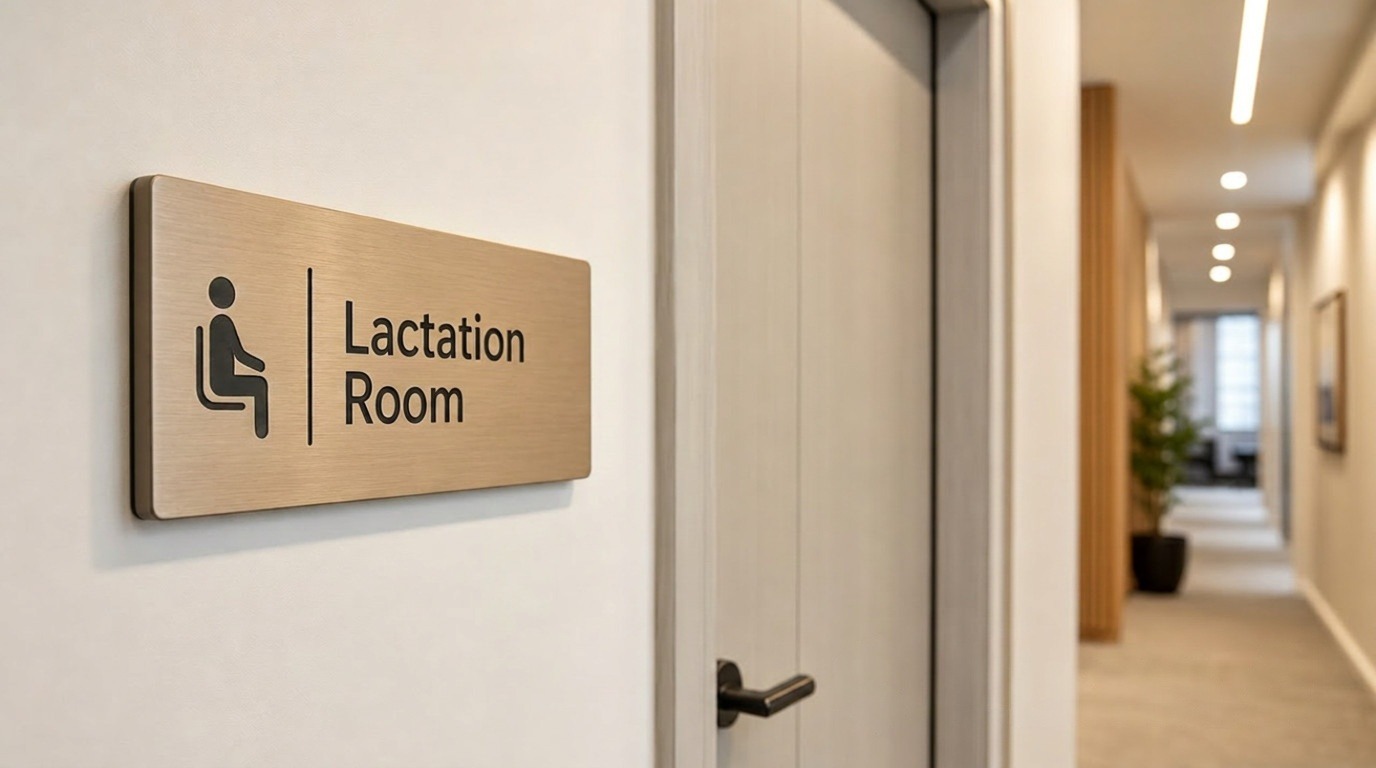
Connecticut already had a lactation accommodation law. What the Act does is turn soft, permissive language into firm obligations. Beginning October 1, 2026, employers must provide reasonable break time for an employee to express breast milk or breastfeed on site, and that time is in addition to regularly scheduled meal or rest breaks, not carved out of them. Translation for managers: "Just use your lunch" no longer cuts it.
The space requirements got sharper, too. Absent undue hardship, the lactation room must be private and shielded from intrusion; it cannot be a bathroom, it has to sit near a refrigerator or employee-provided cold storage, and it must include access to an electrical outlet. These rules apply to every employer, even one with a single employee. They also stack on top of the federal PUMP for Nursing Mothers Act, which already requires a private, non-bathroom space for up to a year after a child's birth.
Read those three physical requirements again: privacy, cold storage, and an outlet, because that is exactly the gap we built our furniture to close. A new parent should not be pumping in a converted supply closet with nowhere cold to store milk and no outlet in reach.
This is where we come in. Our lactation pods drop a private, soundproof room into an open floor plan with no construction. Our all-in-one lactation station turns a bare room into a compliant space with a built-in fridge and outlets, and our lactation chair makes the daily reality of pumping a good deal more comfortable. Privacy, refrigeration, and electricity are all handled, which lines up cleanly with what the new law now asks of you.
What to do: walk your building with these three requirements in hand, update your handbook to reflect that the breaks are mandatory rather than optional, and coach supervisors on scheduling around them.
Looking ahead to 2027
Two industry-specific changes arrive later, and they matter if they touch your world.
Construction comes first. For contracts entered on or after January 1, 2027, a contractor can be held jointly and severally liable for unpaid wages owed to a subcontractor's employees, even without directly employing them. Tighten your indemnification language and your subcontractor due diligence accordingly.
Then, on July 1, 2027, a service contract worker retention law kicked in, aimed at facilities management, janitorial, security, food service, and similar arrangements at covered locations. When a service contract changes hands, the successor employer generally has to keep incumbent workers for at least 90 days, issue written offers in a set form, and avoid terminations without just cause during that stretch. If you outsource or bid on these services, fold legal review into your transition planning.
The takeaway
Public Act 26-12 is not a single policy tweak; it is a multi-department compliance project with a fast-approaching October 1 deadline and a couple of 2027 follow-ons. The throughline across all of it is the same: more transparency and stronger protections for employees and their families. Sort out which sections apply to you, fix the paperwork, and do not leave the physical spaces for last.
On the lactation piece, we can take that worry off your plate quickly. At Nessel, we make pods, stations, and chairs designed to meet these exact requirements, and most arrive ready to use without a contractor or a permit. Reach out to Nessel, and we will help you get a compliant lactation space in place well before the law takes effect.
Frequently Asked Questions
When do the Connecticut 2026 workplace law changes take effect?
Most provisions of Public Act 26-12 take effect October 1, 2026. The construction joint-liability rule applies to contracts entered into on or after January 1, 2027, and the service contract worker retention law begins on July 1, 2027.
What does the new lactation accommodation law require?
Starting October 1, 2026, employers must provide reasonable break time to express milk or breastfeed on site, in addition to regular breaks. Absent undue hardship, the space must be private, shielded from intrusion, not a bathroom, near refrigeration or cold storage, and have access to an electrical outlet. It applies to all employers, including those with one employee.
Do small businesses have to comply?
In most cases, yes. The lactation and wage transparency rules apply to employers of all sizes, and the "stay-or-pay" ban now reaches every employer after the prior small-employer exemption was removed.
What is the new ADA accommodation notice deadline?
Existing employees must receive written notice of their accommodation rights within 120 days of October 1, 2026, which is January 29, 2027. New employees receive it at hire, and any employee who discloses a disability must be notified within ten days.
Which employers need a pay code guide?
Employers with 100 or more employees must publish a plain-language pay code guide covering overtime and common pay differentials, posted on their website in multiple languages, effective October 1, 2026.
Sources
- Connecticut General Assembly, Public Act No. 26-12 (full text): https://www.cga.ct.gov/2026/ACT/PA/PDF/2026PA-00012-R00HB-05003-PA.PDF
- Littler, "Public Act No. 26-12 Is a Gamechanger for Connecticut Workplace Compliance": https://www.littler.com/news-analysis/asap/public-act-no-26-12-gamechanger-connecticut-workplace-compliance-here-are.
- Day Pitney, "Connecticut Enacts Broad Workforce Legislation Impacting Employer Obligations": https://www.daypitney.com/connecticut-enacts-broad-workforce-legislation-impacting-employer-obligations
- Jackson Lewis, "New Laws Are Changing Connecticut Employers' Pay, Accommodation, AI Obligations in '26/27": https://www.jacksonlewis.com/insights/new-laws-are-changing-connecticut-employers-pay-accommodation-ai-obligations-2627
- U.S. Department of Labor, Fact Sheet #73, federal PUMP Act protections (revised December 2025): https://www.dol.gov/agencies/whd/fact-sheets/73-flsa-break-time-nursing-mothers
Legal Disclaimer: This article is provided by Nessel for general informational purposes only and does not constitute legal advice. While we make every effort to ensure accuracy, employment laws change frequently and their application varies based on individual circumstances. The summaries of Connecticut Public Act 26-12 above are not a substitute for reading the full text of the law or consulting qualified counsel. Nessel is not a law firm and does not provide legal services. Before making any compliance decisions, you should consult a licensed attorney or qualified human resources professional regarding your specific situation. Nessel assumes no liability for actions taken or not taken based on the content of this article.

